


• admindesk@icoyacaafrica.org
News Photo

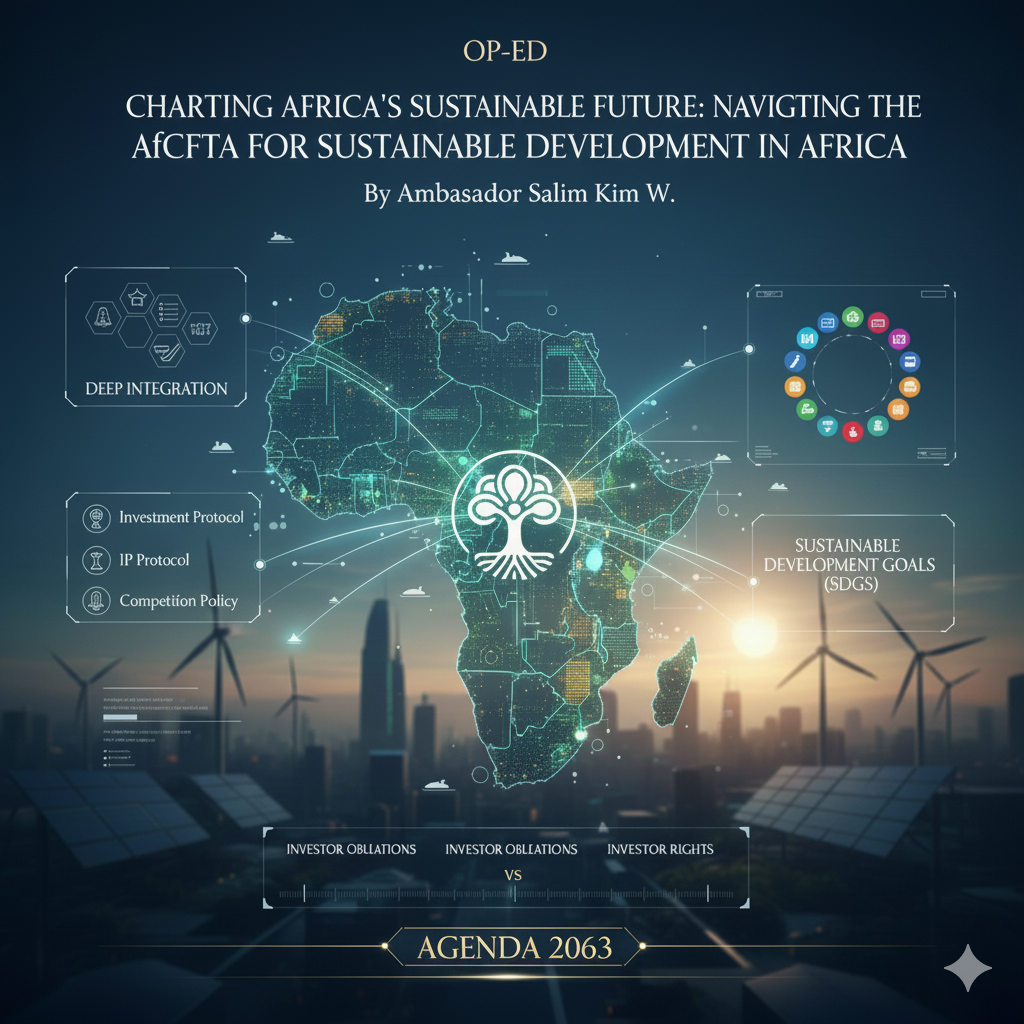
Africa’s Sustainable Future: Navigating the AfCFTA for Sustainable Development

  • Blog
  • January 04, 2026

The African Continental Free Trade Area (AfCFTA) is often celebrated as the world’s largest free trade area by the number of participating countries. However, its true value lies not just in the volume of goods it can move, but in the quality of development it can catalyze. As we navigate the complexities of 2026, the AfCFTA has evolved from a simple tariff-reduction mechanism into a comprehensive framework for inclusive growth, industrialization, and environmental stewardship.

At its core, the AfCFTA is Africa’s primary engine for achieving the UN Sustainable Development Goals (SDGs) and the AU’s Agenda 2063. By creating a single market of 1.4 billion people, it offers the scale necessary to break the "commodity trap" and transition toward a value-added, green economy.

The Power of 'Deep' Integration: The AfCFTA Protocol on Investment

Unlike traditional trade deals that focus only on "at the border" measures like tariffs, the AfCFTA utilizes "deep" integration through its Protocol on Investment. This protocol is a landmark in international law, explicitly designed to bridge the gap between economic profit and social responsibility.

Right to Regulate: It reaffirms the sovereign right of African states to adopt environmental and labor reforms without fear of predatory legal action from investors.

Investor Obligations: It shifts the burden of responsibility, requiring investors to uphold high standards of human rights, anti-corruption, and environmental protection.

Inclusivity: By providing preferential treatment for local communities and SMEs, the protocol ensures that foreign capital empowers rather than displaces local populations.

Safeguarding the Future: Environmental & Labor Standards

Sustainability is no longer a peripheral issue in African trade; it is a prerequisite for market entry. The AfCFTA mandates that trade liberalization does not lead to a "race to the bottom" regarding environmental or consumer protection.

Standardization: By harmonizing sanitary and Phytosanitary (SPS) measures and technical trade barriers (TBT), Africa is creating a single regulatory space. This makes it easier for green businesses to scale cross-border while ensuring that "Made in Africa" products meet global sustainability benchmarks.

Climate Resilience: The framework encourages "climate-smart" trade, reducing the continent's vulnerability to global shocks such as the EU’s Carbon Border Adjustment Mechanism (CBAM) by fostering low-carbon production at home.

The Green Transition: From Raw Materials to High-Tech Value

Africa holds over 30% of the world’s critical green minerals, including lithium, cobalt, and manganese. For too long, these resources were exported raw, leaving the continent with environmental degradation and little economic gain. The AfCFTA changes this narrative through Regional Value Chains (RVCs). The AfCFTA is the vehicle that will turn Africa from a source of raw materials into a global hub for green industrialization.

By leveraging the African Green Minerals Strategy (AGMS), the AfCFTA facilitates projects like the DRC-Zambia Battery and Electric Vehicle (BEV) value chain. This allows the continent to process its own minerals into high-tech components, creating millions of "green jobs" for Africa’s youth and ensuring that the global energy transition pays dividends to the African people first.

The DRC-Zambia Battery Value Chain – A Blueprint for Green Industrialization

As Africa charts its sustainable future, no project exemplifies the "deep" integration of the AfCFTA better than the DRC-Zambia Battery and Electric Vehicle (BEV) initiative. By 2026, this partnership will have moved from a vision of raw resource extraction to a concrete roadmap for a continental high-tech hub.

1. The Power of Mineral Complementarity

The Democratic Republic of Congo (DRC) and Zambia together hold over 70% of the world's cobalt and are Africa's leading copper producers. Under the old "shallow" trade model, these minerals would be shipped to Asia or Europe for processing.

Under the AfCFTA, these two nations are leveraging their combined mineral wealth, including lithium, nickel, and manganese, to build a Transboundary Special Economic Zone (SEZ). This zone, with key sites in the Copperbelt (Zambia) and Katanga (DRC), is designed to host the continent’s first precursor plants for lithium-ion batteries.

2. AfCFTA: The Regulatory Glue

The success of this project isn't just about the minerals; it's about the "behind the border" harmonization provided by the AfCFTA:

  • Protocol on Investment: The initiative is governed by a common framework that mandates high Environmental, Social, and Governance (ESG) standards, ensuring that "green" batteries aren't produced through "brown" or exploitative labor practices.
  • Rules of Origin: By defining what constitutes a "Made in Africa" battery, the AfCFTA encourages the sourcing of components from across the continent, such as phosphate from Morocco or graphite from Mozambique, creating a truly continental value chain.
  • Trade Facilitation: The Lobito Corridor, a refurbished rail link connecting the mines to the Atlantic, is being optimized under AfCFTA transit rules to reduce the time and cost of moving processed goods to global markets.

3. Economic and Social Impact

By 2026, the project aims to capture a larger slice of a global EV market projected to reach $8.8 trillion. The shift from exporting raw ore to manufacturing battery precursors is expected to:

  • Reduce Emissions: Localizing precursor production could cut battery-related carbon emissions by up to 30% compared to current global supply chains.
  • Create Jobs: Projections suggest the creation of over 40,000 to 80,000 high-skilled "green jobs" in engineering, chemistry, and logistics.
  • Resilience: By building domestic industrial capacity, the DRC and Zambia are shielding their economies from the volatile price shocks of raw commodity markets.

The DRC-Zambia initiative is the 'proof of concept' for the African Green Minerals Strategy. It proves that when we integrate deeply, we don't just trade more, we build better.

Comparison: Traditional BITs vs. AfCFTA Investment Protocol

Feature

Traditional Bilateral Investment Treaties (BITs)

AfCFTA Investment Protocol (2026)

Primary Goal

Protect foreign capital.

Foster sustainable development.

Environmental Rules

Often seen as "barriers" to trade.

Mandates Environmental Impact Assessments (EIAs).

State Sovereignty

Restricted by strict ISDS clauses.

Reaffirms the "Right to Regulate" for climate.

Investor Duties

Minimal to none.

Binding human rights & anti-corruption duties.

Implementation: The Final Frontier

While the framework is robust, its success hinges on effective implementation. As we move forward, three priorities must guide our journey:

1. Domestic Alignment: Creating Regulatory Coherence

The AfCFTA is a "top-down" agreement that requires "bottom-up" action. While protocols are signed at the continental level, they are enforced at the national level.

  • The "Audit" Phase: Member states must conduct Regulatory Audits to identify domestic laws that contradict AfCFTA protocols. For example, a national law that gives preferential treatment to domestic investors may need to be amended to align with the AfCFTA’s National Treatment principle.
  • The "AfCFTA Champion" Model: Experts suggest appointing a dedicated National AfCFTA Coordinator within each Ministry of Trade. This "Champion" ensures that reforms are not siloed but integrated across labor, environment, and finance ministries.
  • Renegotiating the Past: Countries must move to harmonize their older Bilateral Investment Treaties (BITs) with the new Protocol on Investment. This ensures that a single, high-standard "Green Investment" framework applies to everyone, removing the legal confusion that often deters long-term capital.

2. Infrastructure Investment: Beyond Tariffs to Logistics

You cannot trade duty-free if the road doesn't exist. The US$50 billion annual gap isn't just a number; it represents the missing bridges and data cables of the continent.

  • Integrated Economic Corridors: We are shifting from "isolated roads" to "integrated corridors" like the Lobito Corridor. This approach bundles transport (rail/road) with energy (power lines) and digital (fiber optics), creating a high-speed spine for regional value chains.
  • The Adjustment Fund: Managed by Afreximbank, this fund helps countries bridge the gap. It provides Base Funding for tariff revenue losses and Credit Funding to help the private sector upgrade machinery and logistics to stay competitive in a larger market.
  • Digital Sovereignty: Closing the digital gap is essential for the Protocol on Digital Trade. By harmonizing data privacy laws and cross-border payment systems (like PAPSS), we can reduce the cost of trade by up to 20%, even before a single truck leaves the warehouse.

3. Monitoring & Accountability: The "Continental Scorecard."

To ensure that the AfCFTA doesn't just benefit big corporations, we need a transparent way to measure its impact on poverty, gender, and the environment.

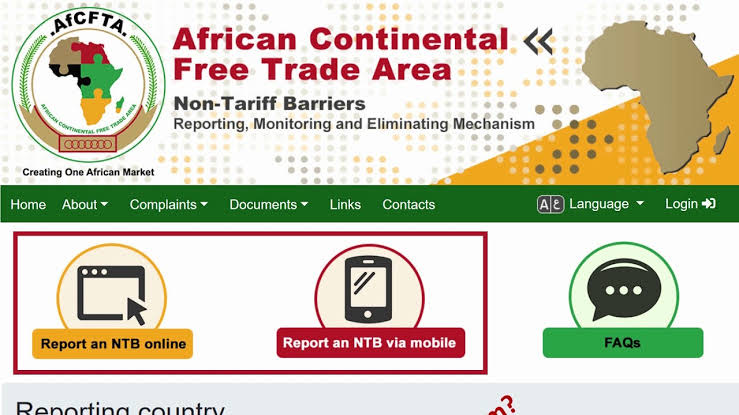
  • Regional Scorecards: Borrowing from the success of the East African Community (EAC), the AfCFTA Secretariat is developing a Continental Common Market Scorecard. This tool publicly tracks which countries have removed non-tariff barriers (NTBs) and which are falling behind.
  • Social & Environmental KPIs: Accountability isn't just about trade volume. New frameworks are being developed to monitor:
    • Gender Impact: The percentage of women-led SMEs participating in cross-border trade.
    • Carbon Intensity: The "carbon footprint" of intra-African industrial growth.
    • Labor Standards: Compliance with the AfCFTA’s commitments to fair wages and safe working conditions.
  • The Guided Trade Initiative (GTI): This acts as a "live pilot." By monitoring the eight countries currently trading under the GTI (like Ghana, Kenya, and Rwanda), the Secretariat can identify real-world bottlenecks and fix them before the full rollout to all 55 nations.

Conclusion

The AfCFTA is more than a trade agreement; it is a declaration of economic sovereignty. By navigating this framework with a focus on sustainability, Africa is not just chasing growth, it is charting a future that is resilient, inclusive, and green.

Share This News

Comment

Do you want to get more information about us?