
• admindesk@icoyacaafrica.org
News Photo

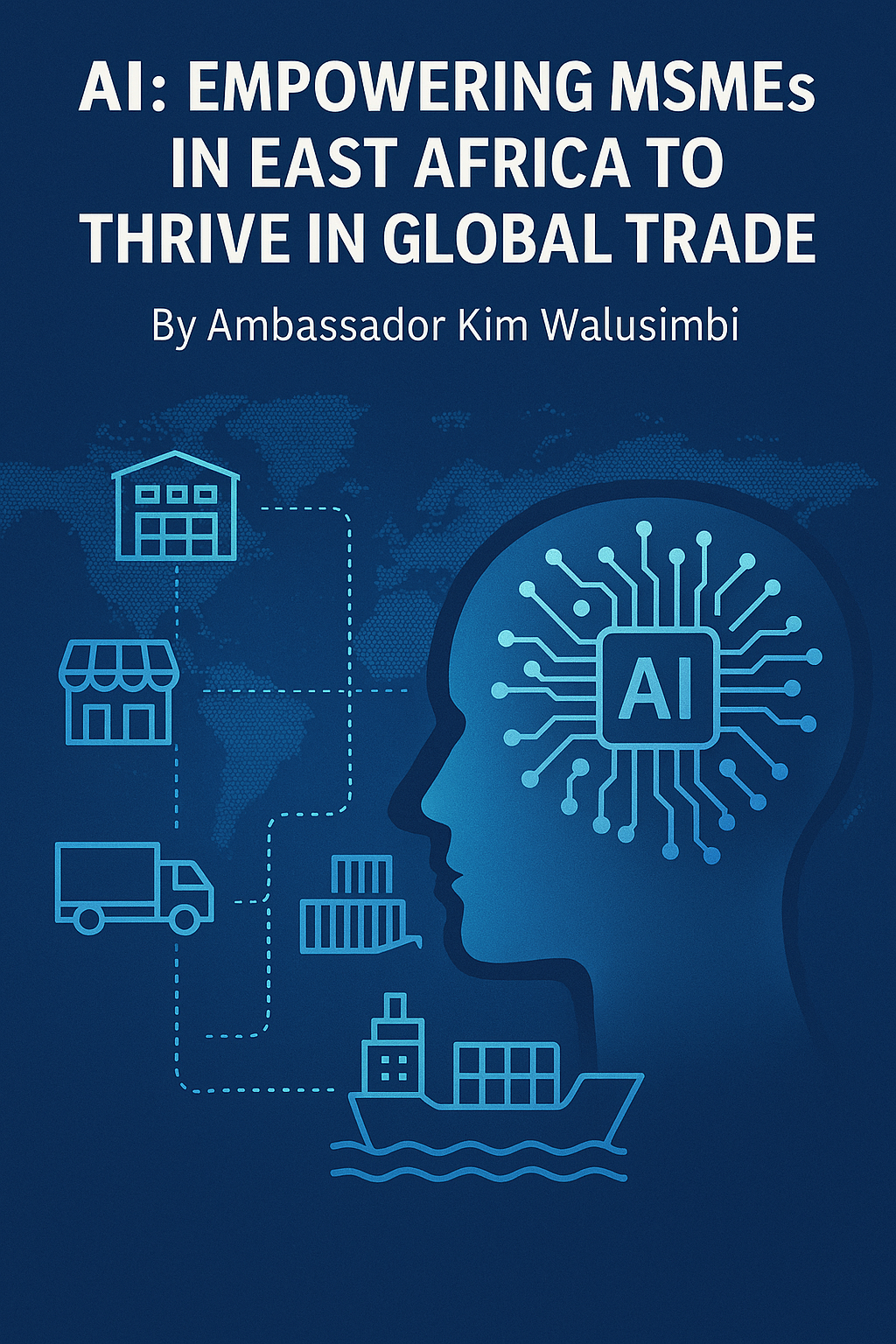
AI: Empowering MSMEs in East Africa to Thrive in Global Trade

  • Blog
  • February 17, 2026

By Ambassador Kim Walusimbi

Artificial intelligence (AI) is revolutionizing global trade, providing micro, small, and medium-sized enterprises (MSMEs) with unprecedented tools to streamline operations, cut costs, and dismantle traditional barriers to international markets. For MSMEs in the East African region, comprising countries such as Uganda, Kenya, Tanzania, Rwanda, Burundi, and South Sudan, this transformation is particularly vital. These businesses, which form the backbone of our economies, often grapple with complex supply chains, regulatory hurdles, and limited resources. AI-driven solutions are bridging these gaps by offering real-time analytics for shipment tracking, predictive capabilities to foresee disruptions, and enhanced compliance tools to navigate international regulations.

This shift not only levels the playing field but also propels smaller enterprises toward sustainable growth in an increasingly interconnected world.

Role of AI in Facilitating International Trade for East African MSMEs

Artificial intelligence is transforming global trade in significant ways, equipping micro, small, and medium enterprises (MSMEs) with advanced tools to streamline supply chains, cut operational costs, and break through persistent trade barriers. Modern AI solutions deliver real-time insights, monitor shipments, predict potential disruptions, and strengthen compliance with international regulations. For smaller businesses, this evolution is crucial in navigating the complexities of fast-changing markets. Recent innovations have introduced specialized AI systems that go beyond traditional task-based assistants, offering autonomous decision-making and managing entire workflows. These capabilities make them particularly suited for global sourcing, logistics, and financial operations. In response, international organizations and industry leaders are increasingly working to embed AI into technical assistance and capacity-building programs, ensuring businesses worldwide can harness its full potential.

In East Africa, AI is not just a technological novelty; it's a practical enabler for MSMEs engaging in cross-border trade. Traditional challenges such as inefficient logistics, high transaction costs, and market unpredictability are being addressed through innovative AI applications. For instance, AI-powered platforms optimize supply chains by analyzing vast datasets to predict demand, manage inventory, and reduce waste. In Kenya, Twiga Foods leverages AI to streamline agricultural supply chains, connecting smallholder farmers directly with retailers and exporters, thereby minimizing losses and enhancing export readiness for international markets.

Moreover, purpose-built AI systems are emerging that go beyond simple task automation. These advanced tools exhibit autonomous decision-making and handle end-to-end workflows across sourcing, logistics, and financial operations. In Uganda, 3D Services Limited's DASH AI dashcam integrates AI for advanced driver assistance and blind spot detection, significantly improving safety in cross-border logistics and reducing accident-related disruptions in trade routes across the region.

Similarly, fintech innovations like Kenya's Hustler Fund use AI-driven credit scoring to provide low-interest microloans to MSMEs, enabling them to finance international trade ventures without traditional banking barriers. AI also enhances compliance and market access. Tools powered by machine learning automate regulatory checks, ensuring adherence to international standards such as those under the African Continental Free Trade Area (AfCFTA). This is crucial for East African MSMEs exporting goods like coffee, tea, and avocados, where quality and traceability are paramount. Fintech solutions, including real-time payment systems and AI-driven compliance tools, further simplify cross-border transactions, as highlighted in initiatives that lower payout thresholds and enable mobile wallet integrations for unbanked entrepreneurs.

Ongoing Training Programs, Workshops, and Campaigns in East Africa

Recognizing AI's potential, international organizations, governments, and private sector leaders are ramping up capacity-building efforts tailored to East African MSMEs. These initiatives focus on equipping businesses with the skills to harness AI for international trade, fostering a digital ecosystem that supports intra-African and global expansion.

One prominent program is the AfCFTA Digital Inclusion and Entrepreneurship Programme, launched by Google and the AfCFTA Secretariat. This free training, powered by Google's Hustle Academy, aims to skill 7,500 African SMEs, including many in East Africa, in AI, cloud tools, and cross-border digital trade. Modules cover AI for productivity (using tools like Google Gemini for automation and data analysis) and practical applications of AfCFTA policies, delivered in multiple languages to ensure accessibility.

In Kenya, this builds on the Hustle Academy's track record of supporting over 18,000 SMEs since 2022. Microsoft's AI Tour and Skilling Initiative in Kenya is another key effort, training organizational leaders, professionals, and MSMEs in AI and cybersecurity. The Regional Centre of Competence for Digital and AI Skilling has already registered nearly 6,500 public sector officials and is expanding to include private sector boot camps, with interest from neighboring Uganda.

The East African Business Council (EABC), in partnership with the International Trade Centre (ITC) under the EU-EAC Market Access Upgrade Programme (MARKUP II), hosts webinars and coaching sessions on quality compliance and digital solutions. A recent national webinar in Nairobi focused on the EAC Quality for Trade Platform, training MSMEs in food safety, traceability, and export readiness for value chains like coffee and avocados. ITC's Intra-African Trade e-Learning program complements this with free modules on export preparation, market research, and leveraging AfCFTA opportunities.

Continent-wide but impactful in East Africa, AUDA-NEPAD's AKILI AI platform, launched with Meta and Deloitte, offers the MSME UpSkill Lab, an investor-readiness program providing practical AI skills and direct investor access to overcome finance and market navigation barriers. Additionally, the ICC-ITC-WTO Small Business Champions Competition 2026 invites proposals for AI training programs, workshops, and campaigns specifically aimed at enhancing MSMEs' international trade capabilities, with a deadline in March 2026.

The Clear Link Between Small Businesses, International Trade, and AI

In the East African Region, the convergence of Micro, Small, and Medium Enterprises (MSMEs), international trade, and Artificial Intelligence (AI) is creating a "leapfrog" effect. While small businesses traditionally struggled with the "thick" borders of the East African Community (EAC), AI is thinning these barriers by digitizing trust and logistics. As of 2026, the region is witnessing a strategic shift where AI is no longer a luxury but a fundamental "trade facilitator."

The nexus between MSMEs, international trade, and AI is evident: AI democratizes access to global markets for small businesses that previously lacked the scale or expertise to compete. In East Africa, where MSMEs contribute over 80% of employment and GDP, AI bridges gaps in infrastructure, skills, and finance. By automating processes and providing data-driven insights, AI enables these enterprises to expand exports, foster intra-regional trade under AfCFTA, and integrate into global value chains. This not only boosts economic resilience but also promotes inclusive growth, empowering women-led and youth-owned businesses to participate in international trade.

1. The Strategic Link: AI as the Great Equalizer

In East Africa, MSMEs often face three "death valleys": lack of market intelligence, high logistics costs, and limited access to trade finance. AI addresses these directly:

  • Market Intelligence & Personalization: AI-powered analytics now allow a Tanzanian textile MSME to identify niche fashion trends in Europe or West Africa without hiring expensive consulting firms.

  • Breaking Language Barriers: Generative AI and Neural Machine Translation (supporting local languages like Swahili, Luganda, and Amharic) are now enabling real-time negotiations between traders who previously couldn't communicate, fostering intra-regional trade.

  • Digitizing Trust: In international trade, trust is expensive. AI-driven credit scoring using alternative data like mobile money transactions (highly prevalent in Kenya and Uganda) now allows MSMEs to secure the trade financing needed to fulfill export orders.

2. Impact on Trade Facilitation and AfCFTA

The AfCFTA Digital Trade Protocol (adopted recently) has become the backbone for AI integration. In East Africa, this is manifesting in several high-impact areas:

A. Customs & Border Modernization

AI is being integrated into Single Window systems in countries like Rwanda and Kenya.

  • Predictive Risk Management: AI algorithms analyze historical shipment data to predict which containers are "low risk," allowing them to bypass physical inspections. This reduces "dwell time" at borders like Malaba or Busia from days to hours.

  • Automated Classification: AI helps small exporters correctly classify their goods under the Harmonized System (HS) codes, reducing fines for misdeclaration.

B. Smart Logistics and Supply Chains

Logistics typically accounts for up to 40% of the cost of goods in East Africa due to poor infrastructure.

  • Route Optimization: Startups like Twiga Foods are now using AI to optimize delivery routes, reducing fuel consumption and ensuring perishable agricultural exports reach their destination fresh.

  • Demand Forecasting: AI is also helping MSMEs predict seasonal demand spikes in foreign markets, preventing "stock-outs" or wasteful overproduction.

3. Inclusive Growth: Empowering Women and Youth

East Africa’s trade landscape is unique because of the high participation of Informal Cross-Border Traders (ICBT), many of whom are women.

  • Financial Inclusion: AI-based fintech platforms are providing "nano-loans" to women-led MSMEs that lack traditional collateral.

  • The Youth Dividend: With 70% of the region's population under 35, youth-owned tech startups are the ones building these AI tools. This creates a circular economy where youth build the AI that empowers their peers to trade.

4. Challenges: The "Digital Moat."

While the link is clear, the impact is constrained by:

  • Digital Infrastructure: Internet shutdowns or cable cuts (like the 2024 submarine cable disruptions) still pose a "fragility risk" to AI-dependent trade.

  • Regulatory Fragmentation: While the AU Continental AI Strategy (2024) provides a roadmap, individual EAC countries still have varying data privacy laws, which can complicate cross-border AI data flows.

  • The "Digital Moat": MSMEs in rural areas without reliable electricity (over 500 million people across Africa) risk being further marginalized by the "AI divide."

  • Data Sovereignty & Governance: As highlighted by the State of Internet Freedom in Africa 2025 report, there is a lack of harmonized AI legislation. Fragmented rules can make it expensive for an MSME to stay compliant when trading across borders.

  • Infrastructure Gaps: AI requires high-speed internet and reliable power, both of which remain inconsistent in rural East Africa.

The impact is clear: AI is turning "land-locked" MSMEs into "land-linked" global players. By reducing the cost of information and the cost of distance, AI allows a small honey producer in rural Uganda to compete on the shelves of a grocery store in Dubai or Accra.

Strategic Recommendations 

To maximize AI's impact for SMEs to trade internationally, coordinated action is essential:

  • For Governments: Invest in digital infrastructure and AI policy frameworks, such as expanding fiber networks and adopting ethical AI guidelines. Collaborate with programs like Microsoft's to scale national skilling initiatives, ensuring subsidies for MSME AI adoption.
  • For International Organizations and Industry Leaders: Expand partnerships like Google-AfCFTA and ITC programs to include more localized content and mentorship. Prioritize funding for AI tools in underserved sectors like agriculture and logistics.
  • For Start-ups and MSMEs: Actively participate in available trainings, starting with free resources like Hustle Academy. Integrate simple AI tools for daily operations, such as predictive analytics for supply chains, and network through platforms like AKILI AI for investor opportunities.
  • For All Stakeholders: Foster public-private collaborations to address data privacy and skill gaps, ensuring AI adoption is ethical and inclusive.

In conclusion, AI is not merely a tool but a catalyst for East African MSMEs to redefine their role in global trade. By embracing these innovations and supporting capacity-building, we can unlock a future of prosperity and connectivity for our region.

The author is an AfCFTA Trade Advisor, Digital Trade Trainer, and an Economic and Commercial Diplomacy Practitioner based in East Africa. 

Share This News

Comment

Do you want to get more information about us?